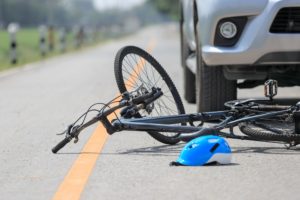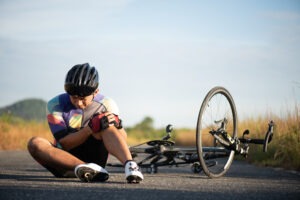



Whether the crash happens along Medlock Bridge Road, near a neighborhood intersection, or in a mixed-use area with steady traffic, bike accidents in Johns Creek are rarely random. They often trace back to a specific decision: misjudging distance, ignoring a traffic rule, or simply not paying attention to a cyclist’s presence.
The bicycle accident attorneys in Johns Creek, GA, at Kaine Law work with victims who are trying to make sense of what happened and what comes next. After a collision, questions about fault, medical bills, and insurance tend to surface quickly. Call us today for answers, and learn how our Johns Creek personal injury lawyers can help during your free case consultation.
The Negligent Driver Behaviors Behind Bicycle Accidents
Most bicycle accidents in Johns Creek stem from conduct that could have been avoided. On roads that combine commuter traffic with residential access, like State Bridge Road or Jones Bridge Road, drivers are expected to account for cyclists sharing the same space. When they fail to do so, the consequences can be immediate.
Common behaviors include:
- Misjudging a cyclist’s speed
- Passing without sufficient clearance
- Failing to yield at intersections
- Driving while distracted, including texting or interacting with navigation systems
- Drifting into bike lanes or shoulders
- Speeding through residential corridors or near parks where cyclists are present
Each of these actions reflects a breakdown in attention or judgment that can place a cyclist directly in harm’s way.

For a free legal consultation with a bicycle accident lawyer serving Johns Creek, call 404-214-2001
What Goes Into Proving Fault After a Bicycle Accident
Establishing fault after a bicycle accident involves more than pointing to what went wrong. An injury claim must show how a driver’s actions fit within Georgia’s legal framework for negligence and how those actions caused measurable harm.
Key elements involved in proving fault include:
- Duty of Care: Drivers must operate their motor vehicles in a way that accounts for cyclists and shared road use
- Breach of Duty: Unsafe passing, failure to yield, or distracted driving can violate that obligation
- Causation: The driver’s conduct must be directly tied to how the crash occurred
- Damages: The injured cyclist must show documented losses resulting from the collision
Types of evidence that support a bicycle accident claim:
- Johns Creek Police Department reports
- Accident scene photographs, including vehicle and bicycle damage
- Statements from witnesses
- Medical records from providers
- Traffic camera footage or nearby residential surveillance video
- Expert analysis
The strength of a claim often depends on how early and thoroughly this evidence is gathered and preserved.
The Types of Injuries That Often Drive Bicycle Claims
Bicycle accidents frequently result in catastrophic injuries that require more than brief treatment. Because cyclists lack the structural protection of a vehicle, the body often absorbs the full force of impact.
Common injuries include:
- Road rash and soft tissue damage
- Broken bones
- Orthopaedic injuries
- Spinal injuries
- Traumatic brain injuries (TBI)
Initial treatment often begins at nearby facilities like Emory Johns Creek Hospital, and the records created during that process become a central part of any legal claim. The nature and extent of these injuries directly influence how compensation is evaluated.
Financial Recovery After a Bicycle Accident in Johns Creek
A bicycle accident claim is built around the specific losses tied to the incident. These losses generally fall into two primary categories, both of which must be supported by documentation.
Economic damages may include:
- Emergency room care, hospital stays, and follow-up medical treatment
- Rehabilitation, physical therapy, and ongoing medical care
- Lost wages during recovery
- Reduced earning capacity if injuries affect long-term work ability
Non-economic damages may include:
- Pain and suffering
- Loss of enjoyment of life
- Loss of companionship
- Emotional distress
In some cases, punitive damages may be considered. Situations involving excessive speeding, reckless disregard for safety, or similar behavior may open the door to addressing the nature of the conduct itself.
Complete a Free Case Evaluation form now
What Sets Our Approach Apart in Bicycle Injury Cases
At Kaine Law, we approach bicycle accident claims by focusing on the details that actually shape the outcome of a case. We take the time to examine how the crash unfolded, how injuries were documented, and how the claim should be structured to reflect what can be proven.
Our work centers on a more personal attorney-client relationship. Clients are given their attorney’s cell phone number, one-on-one time, and a steady, organized process designed to reduce stress. This approach also includes handling property damage issues as a courtesy and covering case-related expenses so that clients are not taking on additional financial pressure during the process.
Our approach includes:
- Taking the time to understand each client’s situation and priorities
- Maintaining clear, ongoing communication throughout the case
- Providing focused and persistent legal representation
- Offering a concierge-style experience that simplifies each step
- Building claims that reflect both financial losses and physical recovery needs
- Holding insurance companies accountable by requiring support for their settlement positions
This structure allows us to stay aligned with the facts of the case while keeping the process manageable and centered on the client from start to finish.

I fired my old attorney and hired Attorney Evan Kaine because I got to speak with him directly, not just a case manager. Then he got me $50,000 when my old attorney said that my case was dead!
When I got hurt, I didn’t know what to do. I contacted Evan and I’m glad that I did. He came to visit me in the hospital and gave me the comfort and confidence that I wanted in my attorney. He’s a fighter.
Mr. Kaine and his staff are good people. They work hard to help those who need the help during tough times. I am so happy to have found Mr. Kaine and to call him and his office friends.
I needed a strong, trustworthy lawyer with a national reputation. Evan came to my hometown and fought the good fight.
After my husband died, I knew I needed help fighting the insurance company. I knew I couldn’t do it on my own so I called Evan. Evan Kaine fought for me and got me results.
I didn’t know where to turn until I called Evan and his office went right to work for me. I strongly recommend Attorney Evan Kaine.
Evan represented me for a medical claim producing wonderful results. The settlement was right on time, and he made sure I was fairly compensated. Excellent work.
Very informative law team that guided me in the right direction. Very responsive and truly cared about my case. Hopefully I wont need them again but if I do I know I will be in the right hands.
Kaine Law is a great firm. Alison was excellent in communicating with me every step of the way. We were able to get the max payout with their diligence and dedication for what is best for their clients. I would definitely refer this firm to others.
Timing Can Influence the Strength of Your Case
The biggest mistake many accident victims make is waiting to speak with an attorney. Even though Georgia law may provide you two years after the date of the accident to file a personal injury lawsuit, key evidence can be lost if not obtained promptly. Plus, if the deadline does expire, you may lose your right to a fair settlement.
However, we can begin investigating, gathering, and analyzing evidence before it is lost or destroyed, as well as protect your right to fair compensation, but you must call us as soon as possible.
Steps to Take After a Bicycle Accident in Johns Creek
The actions taken immediately after a collision can affect both recovery and the strength of a potential claim. Important steps include:
- Seek medical attention from a qualified healthcare provider
- Call 911 for a police report on the incident
- Take as many photos while at the accident scene as possible
- Collect names and contact information from witnesses
- Preserve the bicycle and any damaged equipment
Then reach out to Kaine Law.
Take the First Step Toward Clarity After a Bicycle Accident
After a bicycle accident in Johns Creek, having a clear understanding of your legal options can change how you move forward. At Kaine Law, we work with injured cyclists to examine what happened, identify where responsibility lies, and develop a path toward financial recovery that reflects the specifics of your situation.
If you are dealing with the aftermath of a collision, our team is available to discuss your case during a no-obligation consultation today. Contact a Johns Creek bicycle accident lawyer at Kaine Law for the legal guidance and representation you deserve.
Johns Creek, Georgia, Bicycle Accident Claim FAQs
Can a cyclist still recover compensation if partially at fault?
Georgia’s comparative fault rule means a cyclist may still recover compensation if they are less than 50% responsible for the accident. Any recovery is reduced by their percentage of fault.
What happens if the driver who caused the crash is uninsured?
In those situations, compensation may still be available through uninsured motorist coverage, depending on the policies in place. Additional investigation may also identify other potential sources of recovery.
What kind of evidence is most useful after a bicycle accident?
The most useful evidence is photographs and medical records. While at the accident scene, take as many photos as you can, and then see a doctor and follow their orders completely without any gaps in treatment.
Call or text 404-214-2001 or complete a Free Case Evaluation form