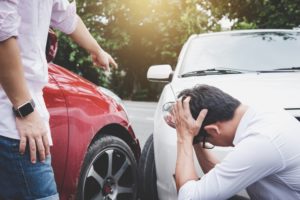

If someone else is driving your car and gets into an accident, your liability insurance will usually pay for damages if the person borrowing your vehicle is at fault. However, if another party caused the crash, they may be responsible for the resulting injuries and financial losses.
What Happens if the Person Borrowing Your Car Is Liable?
If you loan your car to another person and they cause an accident, your insurance will usually pay for damages. However, coverage will depend on the terms of your policy and other factors. For example, your insurer may not pay if the person driving:
- Took your vehicle without permission
- Has their own automobile insurance coverage
- Was breaking the law at the time of the crash (i.e., drinking and driving, driving without a license)
- Was under the legal driving age
Insurance
According to the Office of the Commissioner of Insurance and Safety Fire, Georgia drivers must insure their vehicles with the following:
- $25,000 per person/$50,000 per accident in bodily injury liability coverage
- $25,000 in property damage liability coverage
Drivers can also add optional policies, including collision coverage or uninsured/underinsured (UM/UIM) protection. If someone else is driving your car and causes an accident, your applicable policies will generally pay for injuries and property damages up to your coverage limits.
Legal Responsibility
If you loaned your car to someone and their negligent or wrongful actions led to a crash, they are legally liable if the person they injured has medical expenses and other damages that exceed your insurance coverage. Those injured can pursue additional awards with a claim or lawsuit against the person driving your car, but, in most cases, they cannot sue you.
For a free legal consultation, call 404-214-2001
When the Owner Could Face Liability
Whether or not the vehicle owner faces some liability will depend on who was behind the wheel at the time of the accident. Under the law, the vehicle owner could be responsible for the negligence of some drivers but not others. As a default, the negligent driver will bear responsibility for any accident they cause. However, special circumstances could result in you facing liability as well.
Teen Drivers
One of the circumstances that could lead the vehicle owner to face liability for an accident is when the owner’s minor child causes the collision. A teenager could get in an accident while driving the family car. In this case, the parent that owns the vehicle could be held responsible.
This is true only when the teenager is using the vehicle for a family purpose. This is typically known as the family purpose doctrine.
The Legal Information Institute (LII) states that a family purpose could be anything from running errands to driving to school under this doctrine. These purposes differ from errands that exclusively benefit the teenager. Whether or not a teenager was using the vehicle for a family purpose is often a central issue in personal injury lawsuits.
Employees
The vehicle owner could also be on the hook for an accident if they employ the vehicle driver. Thanks to a legal theory known as respondeat superior, an injury victim could sue the negligent driver and their employer. The case has to meet certain circumstances, though. Specifically, the driver must have been within the scope of their employment at the time of the accident.
The scope of the driver’s employment varies depending on the nature of a person’s job. For example, a professional driver operating a company car is likely to be within the scope of their employment at the time of the accident.
A person taking a company car home after their work day concludes might not be within the scope of their employment. Your attorney could advise you on whether the driver of your vehicle was within the scope of their employment or not at the time of the crash.
Negligent Entrustment
The owner of a vehicle could also be held responsible for the driver’s negligence if the owner should have known better than to entrust their vehicle to that person. Negligent entrustment could involve turning over a vehicle to a driver that is:
- Drunk
- Dangerous
- Reckless driver
For a negligent entrustment case to be viable, the owner must have been aware of the risks the driver poses. If a reasonable person would not have been aware that the driver was inherently dangerous, they will not be responsible for the driver’s damage.
Additionally, the vehicle owner must have willfully allowed the driver to operate their vehicle. After all, this theory of liability is based on a car owner willfully entrusting their vehicle to a dangerous person. If the driver takes the car without authorization, the owner will not be liable for any damage that occurs.
What If Another Party Is At Fault?
If someone else caused the accident, they are financially liable for injuries and property damages. You can recover compensation with an insurance claim or seek awards with a personal injury lawsuit. Every car accident case is different, but, in general, an attorney with our firm can help accident victims pursue the following:
- Vehicle repair or replacement costs
- Current and future medical expenses
- Lost wages, earnings, and benefits
- Lost future earning capacity
- Awards for physical pain, mental anguish, and emotional suffering
- Compensation for the wrongful death of a loved one
How Long Do You Have to Seek Damages?
You should file a claim with your insurance provider or against a liable party’s insurer as soon as possible. First, a delay could give the insurance company a reason to doubt your version of the accident or allege that the injured parties were not actually hurt during the crash. Second, acting quickly allows insurance companies, lawyers, and other involved parties to collect evidence while it is fresh.
Finally, an insurance claim can take a while to work through, and it can become even more complicated when it involves a driver not expressly covered by your policy. You want to leave ample time to negotiate a fair settlement before your window to take legal action closes.
According to O.C.G.A. § 9-3-33, you have two years to file a personal injury or wrongful death lawsuit in Georgia. If the statute of limitations expires, you may be unable to secure compensation. We can help you get started before it is too late.
Do You Need a Car Accident Lawyer?
If someone else is driving your car and gets into an accident, it may be helpful to consult with a lawyer about your options. An attorney with our firm can review your case and determine your best course of action for seeking financial recovery. From there, we can help you negotiate with your insurance companies, fight for you if insurance denies your coverage, or pursue awards from a liable party. We can:
- Draft and file your insurance claims or lawsuit
- Handle phone calls, emails, and meetings
- Investigate your accident and determine fault
- Collect case evidence, including photographs of your vehicle damages and the accidence scene, surveillance or dashcam video, eyewitness testimony, police reports, and medical records
- Prove your losses using bills, receipts, estimates, and other proof of expenses
- Negotiate for the maximum possible settlement
- Protect your rights if the insurance companies play hardball or use bad-faith tactics
- Represent you at trial if necessary
Complete a Free Case Evaluation form now
Call Kaine Law for a Free Consultation
If you or someone you know suffered injuries or property damages in a motor vehicle accident, Kaine Law can help. We offer free consultations and take cases on contingency. With our no-fee guarantee, we never charge upfront or out-of-pocket, and we only get paid if and when we obtain compensation.
Contact us today to learn more and connect with a Georgia injury attorney near you.
Call or text 404-214-2001 or complete a Free Case Evaluation form