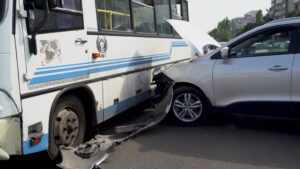
If a bus gets into an accident, anyone injured, including passengers, other drivers, and pedestrians, has the right to file a claim seeking compensation. However, the claims process can become complicated depending on who owns and operates the bus. A private bus company and a public transit system like MARTA may be subject to different rules and deadlines.
In this article, our Atlanta bus accident lawyers can help you understand what happens after a crash and how we can help.
Determining Who Is Liable for a Bus Accident
Determining liability in a bus accident can be a highly complex process. Buses may be owned and operated by private companies or could be part of a public transportation system operated by the government, like MARTA, a public authority created by the Georgia General Assembly. That difference affects how you can file your claim and how the bus owner might fight it.
When a bus is operated by a private company, liability might be more straightforward, focusing on the company’s responsibility for the driver’s actions and the vehicle’s maintenance. However, if the bus is a part of a public transit system, different laws and deadlines may apply. In most cases, Georgia gives you two years from the date of the accident to file a personal injury lawsuit under O.C.G.A. § 9-3-33. Claims involving a public transit system may require you to give formal notice much sooner.
This complexity is further compounded by the fact that multiple parties could be liable for a single accident, including:
- The bus driver
- The entity responsible for bus maintenance
- Local government bodies responsible for road conditions
Sorting all of this out takes experience with bus accident cases. Every case needs a close look to figure out who’s responsible and the best way to get you fair compensation.
For a free legal consultation, call 404-214-2001
Proving Liability for a Bus Crash
Proving who caused a bus accident takes careful work, and it’s the backbone of a strong case. Our Atlanta personal injury lawyers have decades of experience with these cases. Here’s how we help.
Evidence Gathering
We gather the evidence that shows what happened and why, such as:
- Surveillance footage
- Bus maintenance records
- Driver’s employment and training records
- Eyewitness statements
- Police reports
Together, these pieces help us show how the crash happened and who caused it.
Expert Consultation
We can work with accident reconstruction experts to provide insights into the mechanics of the accident, which helps to understand how and why the incident occurred.
Legal Analysis
Leveraging in-depth knowledge of state laws and regulations that govern public transportation and commercial vehicle operations, ensuring a thorough exploration of all potential legal angles.
Negligence Identification
Analyzing evidence to pinpoint negligence, whether it’s on the part of the bus driver, the company owning and operating the bus, or involved third parties.
Our legal team is committed to meticulously navigating each step of this process, focusing on proving liability and securing the just compensation you deserve for your injuries and losses. You can focus on your recovery, knowing that your case is in capable hands.
What Are “Common Carriers”?
“Common carriers” refer to entities that offer transportation services to the public under the authority of a regulatory body. This category includes various modes of transport that serve the general public on set routes and schedules for a fee, such as:
- Buses
- Trains
- Taxis
The designation of a service as a common carrier brings with it heightened legal obligations, especially regarding passenger safety.
In the context of a bus crash, the concept of common carriers significantly affects liability. Given their elevated duty of care, common carriers are held to stricter standards than private individuals or non-commercial entities. Under O.C.G.A. § 46-9-132, a carrier of passengers must exercise extraordinary diligence to protect its passengers. This duty includes (but is not limited to) the following:
- Maintaining vehicles in safe operating condition
- Hiring qualified drivers
- Adhering to safety regulations
When a bus accident occurs, the common carrier’s failure to meet these rigorous standards can be a key factor in establishing liability. For passengers injured in a bus crash, this higher duty of care can help prove negligence in a legal claim.
Our attorneys know how common carrier laws work, and we use that knowledge to fight for people hurt in bus accidents. Our goal is to hold the right parties responsible.
Bus Accident Injuries Can Change Your Life, and Your Claim Should Reflect That
Bus crashes often cause serious injuries. Most passengers ride without seat belts, and some are standing when the crash happens. The size and weight of a bus also put people in other vehicles and pedestrians at greater risk. Common injuries include:
- Traumatic brain injuries (TBI)
- Neck and back injuries, including spinal cord damage
- Fractures
- Internal bleeding
- Burns and deep lacerations
Injuries like these can require surgery, long-term therapy, and months away from work. Some leave victims with permanent limitations that affect their independence and quality of life. Your claim can seek compensation for losses such as:
- Medical expenses, including future healthcare
- Lost wages and reduced earning capacity
- Pain and suffering
- Emotional distress
- Lost enjoyment of life
If the driver’s conduct was especially reckless, such as driving while impaired, punitive damages may also be available.
Complete a Free Case Evaluation form now
Dealing With Insurance Companies After a Bus Accident Takes Strategy
After a bus accident, you may hear from more than one insurance company. Depending on how the crash happened, claims may involve the bus company’s commercial policy, another driver’s insurer, and your own auto coverage. Each insurer’s goal is to limit what it pays. Common tactics include:
- Requesting a recorded statement: An adjuster may ask detailed questions early, then use your answers to downplay your injuries or shift blame.
- Making a quick offer: An early settlement may arrive before you know the full cost of your care.
- Pointing to other parties: Insurers may argue that another driver, a maintenance company, or even an injured passenger shares the fault.
You are not required to give a recorded statement to the other side’s insurer. We handle all communication with insurance companies for you, and when an offer is too low, we push the insurer to justify it.
What to Do After a Bus Accident
Taking the right steps after a bus crash can help protect your health and your claim:
- Ensure safety: Move to a safe location if you can do so without risking further injury.
- Call 911: Contact the police to report the accident. An accident report from the police can be vital for insurance and legal purposes.
- Seek medical attention: You should allow paramedics to examine you at the accident scene or see a doctor as soon as possible.
- Document the scene: If you can, take photos of the scene, your injuries, and any property damage. Jot down the bus number, the route, and the driver’s name.
- Gather witness information: Get contact info from anyone who saw the crash. What they saw could back up your side of the story.
- Report the incident to the bus company: Notify the bus company about the accident but refrain from discussing fault or details.
Then reach out to Kaine Law.
Our Team Can Help If You Were Injured in a Bus Accident
The Kaine Law team can help you fight for the compensation you deserve after a bus crash. We’ll handle every aspect of your case while you focus on your recovery.
There are no upfront costs. We advance the expenses of your case, and you repay them from your recovery only if we win. If we don’t win, you owe us nothing. You’ll also have direct access to your attorney, including their cell phone number, and we offer support in Español. Call us today for a free consultation.
Call or text 404-214-2001 or complete a Free Case Evaluation form